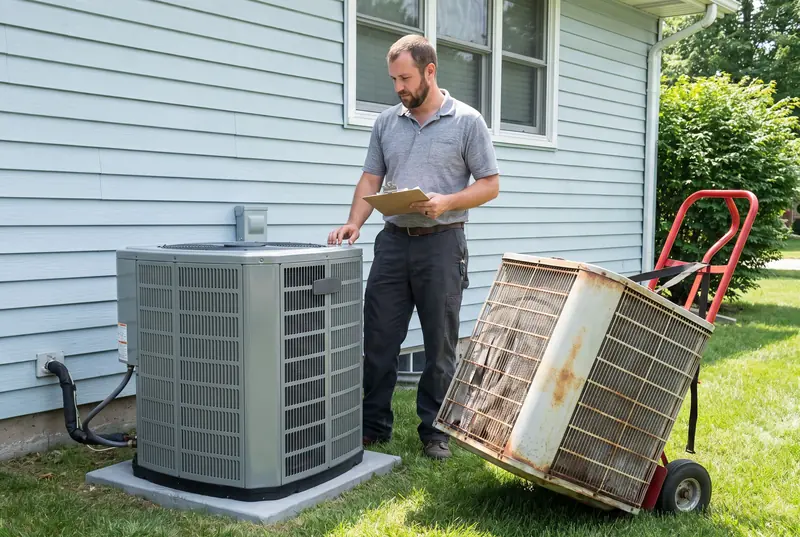

Every HVAC system reaches the point where keeping it alive costs more than letting it go, and the hard part is knowing when you are there. The signals tend to arrive together in New Brunswick, NJ: a compressor drawing more amps each summer, a heat exchanger flagged at the last inspection, refrigerant top-offs on a system that runs R-22 or an early R-410A charge, and utility bills that climb while comfort slides. A useful rule of thumb is simple: when a repair costs a meaningful fraction of replacement on equipment past the twelve-to-fifteen-year mark, the repair is usually buying you months, not years, and every dollar of it is spent on technology a generation behind current SEER2 and AFUE standards.
Most of our service calls are for AC Repair and Furnace Repair. If something has stopped working, start there.
Warning Signs for HVAC Replacement
Catching these issues early helps you avoid costly problems. Keep an eye out for the following clues:
- An aging system, twelve to fifteen years or more, with problems piling up
- A compressor or heat exchanger failure, the two repairs that change the math
- Persistent comfort problems that no repair has solved
- The equipment is loud enough that you notice every cycle
- Higher energy bills year after year with no obvious explanation
- Repair invoices arriving more often and each one bigger than the last
- Corrosion and soot marks growing on the equipment
- Refrigerant leaks that need recharging too often, or an R-22 system
Don't Wait for a Total Failure
Most HVAC failures start small, a weak capacitor, a squealing blower, a system that runs a little longer each week. If you notice any of these signs, call (732) 217-4106 for a prompt inspection.